
Hiring your first employee in Switzerland looks simple on paper, until you discover that Swiss law expects an employer with a local footprint. Social contributions, cantonal rules, written contracts, withholding tax: every detail matters, and mistakes are costly. An Employer of Record (EOR) offers a shortcut. It becomes the legal employer in Switzerland on your behalf and takes charge of compliance with Swiss labor law, while you keep day-to-day management of the person you hire.
This guide helps you decide whether an EOR fits your first Swiss recruitment. You will see which obligations it covers, where its limits sit, and when a local entity becomes the better option.
Direct answer: An EOR in Switzerland is the legal employer of your staff. It signs a compliant Swiss contract, registers the employee with social insurance bodies, runs payroll, and handles AHV/IV/EO, BVG, accident insurance and withholding tax. You keep operational control; the EOR carries the employer-side legal risk tied to Swiss labor law.
Hiring in Switzerland through an EOR — key points
- No Swiss entity needed to employ a resident worker legally.
- The EOR handles contracts, payroll, social contributions and tax at source.
- Onboarding is measured in days, not months.
- Fees are usually a flat amount per employee, separate from mandatory contributions.
- A local subsidiary becomes more relevant for larger teams or permanent establishment risk.
What Is an Employer of Record and Why Swiss Labor Law Creates Barriers for Foreign Employers
An Employer of Record is a company that legally employs workers for the account of another business. The EOR signs the employment contract, pays the salary, and files all declarations required by local law. Your company keeps management of the work itself: tasks, objectives, tools, schedule within legal limits. In short, the EOR carries the employer status; you keep the operational relationship.
Swiss law makes this split especially useful. To employ someone directly in Switzerland, you normally need a local footprint able to register with a compensation fund, a pension institution and the tax authority of the relevant canton. Without that footprint, you cannot easily open the mandatory social insurance accounts or run compliant payroll. A foreign company without a stable establishment that still employs people insured in Switzerland must affiliate to Swiss social insurance; a specialised partner such as an EOR solution in Switzerland can take on those employer obligations contractually.
Why not just create a Swiss subsidiary?
Setting up a Swiss company is a real project. You need share capital, a notary, a commercial register entry, a registered address, bank accounts, VAT registration where relevant, local accounting and ongoing reporting. For a single hire or a short-term test on the Swiss market, this investment is often oversized.
The second barrier is expertise. Swiss HR and payroll involve a specific vocabulary (AHV, IV, EO, BVG, LAA, impôt à la source) and cantonal variations. Internal HR teams based abroad rarely master this toolkit on day one. An EOR brings this expertise ready-made.
Practical scenario
A German software company wants to hire one senior engineer living in Lausanne, without opening a Swiss branch. Instead of incorporating a GmbH subsidiary, the company signs a service agreement with an EOR. The engineer gets a Swiss employment contract issued by the EOR, a Swiss payslip, Swiss social coverage, and keeps reporting daily to the German CTO. The German company funds the salary and the EOR fees, and avoids several months of corporate setup.
Which Swiss Compliance Obligations Does an EOR Cover?
An EOR takes on the full set of employer-side duties attached to a Swiss employment contract. Concretely, that means contract drafting, registration with social bodies, monthly payroll, payment of contributions and taxes, and ongoing reporting. You remain responsible for the commercial decision to hire, the role definition, the salary level and the day-to-day work relationship.
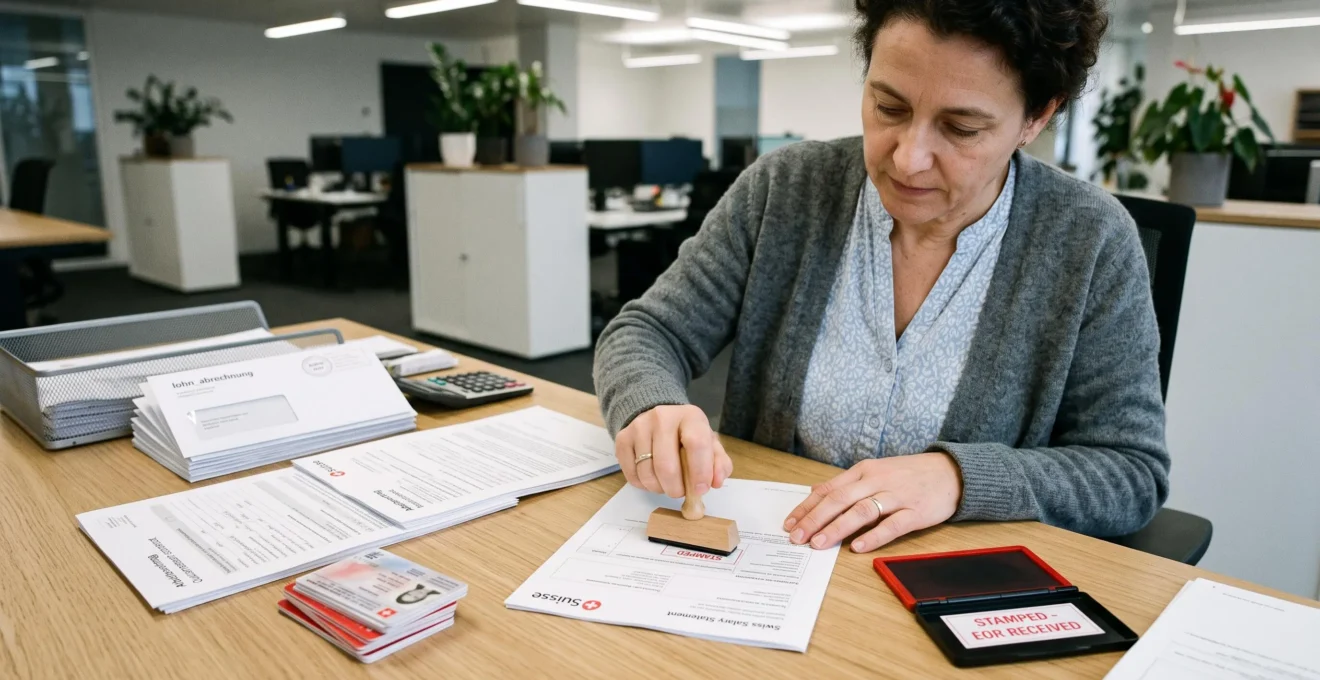
Social contributions: AHV/IV/EO and BVG
The first-pillar contributions cover old-age and survivors’ insurance (AHV/AVS), disability insurance (IV/AI) and income compensation (EO/APG). According to the official AHV/IV guidance on salary contributions, the combined rate is 10.6% of gross salary (8.7% AHV, 1.4% IV, 0.5% EO), split equally between employer and employee at 5.3% each, with no salary ceiling. The employer withholds the employee share from the salary and transfers the total amount, together with its own share, to the compensation fund.
The second pillar is occupational pension (BVG/LPP). The EOR affiliates the employee to a pension institution, calculates the contributions on the insured salary and transfers them. Add family allowances, unemployment insurance, mandatory accident insurance (LAA/UVG) and, in many cantons, additional contributions. The exact rate mix changes with the canton, the pension plan and the employee profile, which is why a single flat percentage rarely tells the full story.
Who owes what: The EOR, as legal employer, carries the obligation to declare and pay these contributions to Swiss authorities. Your company owes the EOR the funded salary and the agreed service fee.
Contracts, payroll and tax at source
The EOR issues a Swiss-law employment contract tailored to the canton of work. It runs monthly payroll, produces compliant Swiss payslips, and files the annual salary certificate (certificat de salaire / Lohnausweis). For foreign nationals subject to withholding tax (impôt à la source / Quellensteuer), the EOR calculates the deduction according to the cantonal scale and transfers the amount to the tax authority.
The federal directives on affiliation of insured persons and employers to compensation funds confirm that employers without a stable Swiss establishment who employ people insured in Switzerland remain subject to specific affiliation duties — duties that a specialised third party can carry on their behalf.
What stays with you
Some topics remain on your side even with an EOR: defining the role, selecting the candidate, setting the salary budget, approving expenses, managing performance, deciding on bonuses and ending the collaboration. You also keep responsibility for the operational conditions of the work (equipment, access rights, confidentiality rules linked to your own business).
Covered obligations vs retained responsibilities
- Swiss employment contract and amendments.
- Registration with compensation fund and pension institution.
- Monthly payroll, payslips, salary certificate.
- AHV/IV/EO, BVG, accident insurance, family allowances.
- Withholding tax calculation and transfer.
- Legal employer reporting duties.
- Hiring decision and role scope.
- Salary, bonus and benefit policy.
- Daily management and performance.
- Business tools, IT access, confidentiality.
- Decision to terminate the contract.
- Any permanent establishment risk linked to your activity.
How an EOR Solution in Switzerland Speeds Up Market Entry
The main practical benefit of an EOR is time. Creating a Swiss subsidiary typically takes several weeks to several months: incorporation, bank account opening, VAT and social insurance registrations, local accounting setup. An EOR, by contrast, can onboard an employee in a matter of days once the contract terms are agreed and the identity and work-permit situation are verified.
You also skip the upfront investment. No share capital to deposit, no notary fees, no permanent local administration to maintain. Your costs are limited to the funded salary (including employer contributions) and a per-employee EOR fee. That structure is predictable, which helps when you need to pitch the hire internally against a full subsidiary business case.

How EOR fees are structured
Most EOR providers charge a monthly fee per employee, either as a flat amount or as a percentage of the gross salary. This fee covers contract management, payroll processing, declarations and administrative support. It is distinct from the mandatory contributions, which are not EOR revenue but legal amounts transferred to Swiss social and tax bodies.
When comparing offers, pay attention to what the fee includes: expense management, bonus runs, work permit support, cantonal registrations, offboarding. A low headline fee often excludes services you will end up needing. Ask for a full written quote based on your real case rather than relying on a generic grid.
What Are the Limits of an EOR for Swiss Compliance?
An EOR is powerful, but it is not a universal solution. It handles the recurring employer-side obligations very well. It does not replace a tax lawyer, a Swiss accountant or a corporate counsel when you face a specific legal question tied to your business model.

Cantonal variations matter: Many employment rules — holidays, withholding tax scales, additional contributions — differ from one canton to another. The SECO FAQ on leave and public holidays notes that only 1 August is a federal public holiday and that cantons can add up to eight more days treated like Sundays. Always confirm cantonal specifics for the employee’s place of work.
When a local entity becomes more relevant
Several situations push toward incorporating in Switzerland rather than staying on an EOR:
- You scale from one or two hires to a sizeable team with its own structure.
- Your activity in Switzerland may create a permanent establishment for tax purposes (fixed premises, local sales decisions, dependent agents).
- You need to issue invoices from a Swiss entity, hold Swiss licences, or sign commercial contracts under Swiss law.
- You want to grant equity, specific long-term incentives or pension plans that your EOR cannot administer.
An EOR is a strong entry vehicle; it is rarely the right long-term setup for a stable Swiss operation. Review the arrangement each year against your headcount, revenue model and tax exposure.
- 1 to 3 hires, remote-friendly roles, no Swiss sales presence:
An EOR is usually the fastest and lightest option.
- Growing team, long-term plan, Swiss client contracts:
Start modelling a local entity in parallel and plan a transition.
- Possible permanent establishment, Swiss premises, local decision-making:
Seek tax and legal advice before signing further EOR contracts.
Steps to Hire Swiss Employees Through an EOR
Once you have decided to use an EOR, the process is more linear than most foreign employers expect. The main effort is upfront, in defining the role and the terms. The administrative sequence then follows a predictable path.
- Define the role and the package
Agree internally on job title, scope, canton of work, start date, gross salary, variable pay, benefits, notice period and any specific clauses (non-compete, confidentiality). The EOR will mirror these terms into a Swiss-compliant contract.
- Share candidate information and work permit status
The EOR needs identity data, residence status and work permit information to confirm eligibility to work in Switzerland and set the correct tax at source profile.
- Contract drafting and signature
The EOR issues the Swiss employment contract, you review it, and the employee signs. The service agreement between your company and the EOR is signed in parallel.
- Registrations with Swiss bodies
The EOR registers the employee with the compensation fund, the pension institution, the accident insurer and, where applicable, the cantonal tax authority for withholding tax.
- Payroll setup and onboarding
Bank details, salary calendar and expense policy are configured. You handle the operational onboarding: tools, meetings, team introduction.
- Monthly run and ongoing compliance
Each month, the EOR produces the payslip, pays the employee, transfers contributions and taxes, and shares a clear invoice summarising salary, employer costs and service fees.
Before you sign: a quick business-case check
An EOR covers the employment side, but your decision to enter Switzerland should still rest on a clear business model and financial plan. If you have not formalised yours, this guide from business model to business plan can help you structure the conversation before you commit to a first Swiss hire.
Can I hire someone in Switzerland without opening a local company?
Yes. By contracting with an Employer of Record, you let a Swiss-registered employer sign the contract, run payroll and handle social and tax declarations for the employee. Your company funds the salary and the EOR fee, and keeps operational management of the work.
Who handles AHV and BVG contributions when I use an EOR?
The EOR, as the legal employer, is responsible for registering the employee with the compensation fund and the pension institution, withholding the employee share, paying the employer share and transferring the full amount. You see these amounts in the monthly invoice from the EOR.
How long does it take to hire an employee in Switzerland through an EOR?
Timelines vary with each provider and with the candidate’s work permit situation. In practice, once the terms are agreed and the documents are complete, onboarding is usually measured in days rather than the weeks or months needed to incorporate a Swiss subsidiary.
Does an EOR replace a Swiss lawyer or tax advisor?
No. An EOR applies Swiss employment rules to the contracts it manages, but it does not provide personalised legal or tax advice on your corporate structure, your permanent establishment risk or complex cross-border situations. For those questions, consult a qualified Swiss advisor.
For a first Swiss recruitment with limited headcount, an EOR usually offers the best balance between speed, compliance and cost. Use it to validate your presence on the market, then revisit the setup once your team, revenue and tax footprint justify a local entity. The information above is general in nature and does not replace tailored legal or tax advice on your specific situation.